Discover
The Heart of the Jungle
TadobaParkbooking.com provides travel assistance and safari booking support for Tadoba–Andhari Tiger Reserve. All safari permits are managed and issued only by the Forest Department via authorized government portals. Our role is limited to coordination and facilitation services.
About Tadoba
Tadoba National Park is one of India’s most famous wildlife sanctuaries and is extremely popular for tiger sightings. It is situated in the Chandrapur district of Maharashtra. The name Tadoba is derived from the local tribal god Taru, while the word Andhari comes from the river that flows through the area.
Tadoba-Andhari Tiger Reserve is the oldest and Biggest national park in Maharashtra. Tadoba National Park was established in 1955 and covers an area of about 1727 sq km. The Andhari Wildlife Sanctuary was created in 1986 and later merged with Tadoba National Park.
Today, Tadoba attracts a large number of wildlife lovers and wildlife photographers, as the chances of tiger sightings are very high in almost every zone. Visitors can also spot leopards, wild dogs, sambar deer, and many other wildlife species.
Tadoba Safari Types
Gypsy Safari Tadoba
Tadoba National Park, situated in Chandrapur, Maharashtra, is the oldest and largest tiger reserve. Jeep safari here is a thrilling adventure as the jeeps are open-top. Safaris operate in both the core and buffer zones. The Royal Bengal Tiger is the main attraction, but visitors can also spot animals such as Chital, Sambar deer, wild dogs, colorful butterflies, and more than 174 species of birds.
Canter Safari Tadoba
Along with jeeps, Tadoba Tiger Reserve offers canter safari, conducted in a 22-seater open bus accompanied by two guides. The canter safari is more affordable but requires offline booking at the MTDC counter. Canter safaris operate mainly in Moharli and Kolara zones, known for higher chances of tiger sightings. The canter takes visitors deep into the forest, offering a memorable wildlife experience.
Core Zone & Buffer Zone
Core Zone
Tadoba Core Zone is the most popular and hearted area of Tadoba National Park. The core
zone is covered with dense forest and is the main spot for sighting Bengal tigers, along
with many other wild animals. You can also see a variety of bird species here. Human
access is restricted in this zone, as it is dedicated exclusively to wildlife. This zone
is made and manages by the Forest Department manages only for wild animals and they
protects this area to ensure the safety and conservation of the animals.
Some of the gates of the Tadoba core zone include Moharli, Kolara, Khutwanda, Navegaon,
Zari, and Pangadi.
Core zone will be open from October to June.
Buffer Zone
The area surrounding the core zone of Tadoba National Park is known as the buffer zone.
It is a woodland region where rural communities coexist with wildlife and actively
participate in tourism activities. Animal sightings in the buffer zone are also good,
though the chances are generally lower than in the core zone. The buffer zone surrounds
and supports the core zone, acting as its protective layer. Unlike the core zone, the
buffer zone remains open even during the monsoon season.
Major gates of the Tadoba Buffer Zone include Adegaon, Ramdegi, Navegaon, Madnapur,
Mamla, Pangadi (Aswal Chuha Gate), Srikada, Zari/Peth, Palasgaon, Kolara Chauradeo,
Kesalghat, Nimdela–Ramdegi, Belara, Alizanza, and Adegaon.
History of Tadoba Andhari Tiger Reserve
According to a mythological tale, a story is told about a man who became a symbol of purity for the people. His name was Taru, a Gond tribal from a respected village. One day, near a lake close to his village, Taru encountered a powerful and fierce tiger. A brave and intense battle took place between Taru and the tiger. Even today, people narrate the ending of the story in different ways. Some say that Taru defeated the tiger, while others believe that Taru was killed by the tiger despite his bravery.
Regardless of what people say, Taru was honored as a great hero. After this incident, the lake and the surrounding area were named Tadoba, which originates from Taru's name.
In 1931, a notice was issued stating that hunting was strictly prohibited in the national park and the surrounding protected zone. Around Tadoba Lake, an area of 45 sq km was declared a sanctuary.
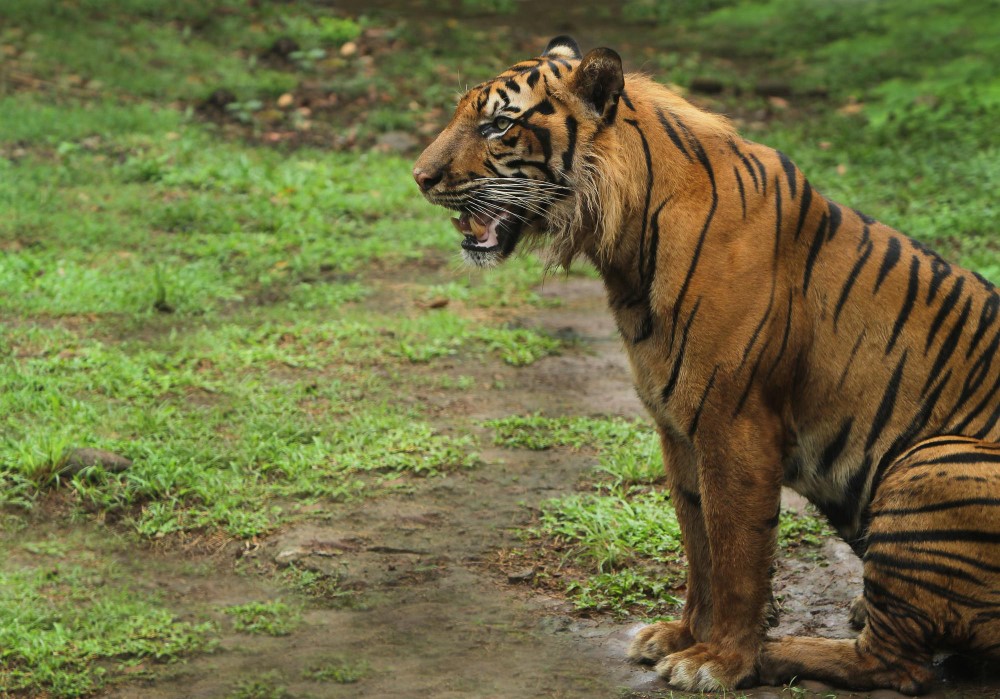
Legend says Chief Taru fought a tiger near Tadoba Lake – giving the park its name
In the 18th century, this region was under the rule of the Marathas, and later it came under British rule. In 1879, the area was declared a reserved forest, and in 1955, Tadoba became India’s earliest national park, established around the same time as Kanha National Park.
Even after its establishment, activities like hunting, poaching, and extensive cultivation continued. After the 1970s, illegal activities increased, leading to the closure of all such operations.
In 1986, around 506.32 sq km of land was declared the Andhari Wildlife Sanctuary, and in 1993, the Tadoba-Andhari Tiger Reserve (TATR) was formed. The area was expanded to 622.87 sq km, merging both the national park and the sanctuary.
Zones in Tadoba
- Moharli Safari Zone
The Moharli Gate is the most popular zone of Tadoba and is well-known for tiger spotting. The chances of seeing a tiger here are quite high. This zone offers open jeep safaris, which provide a unique adventure while exploring the rich flora and fauna. The jeep passes through dense forest areas, increasing the possibility of spotting tigers. - Kolara Safari Zone
The Kolara Gate is highly preferred because of its distinct topography. The chances of seeing various wildlife species are generally good here, although in some areas the sightings may be comparatively lower. Entry into the Kolara zone is possible through the Madnapur, Shirkheda, Alizanza, and Bellara Gates. - Khutwanda Safari Zone
The Khutwanda Gate is one of the top three core zones of Tadoba. This zone is located very close to the Moharli Zone and is easily accessible from Chandrapur and Nagpur. The entire area is surrounded by beautiful flora, fauna, and wildlife, giving it a unique natural charm. - Navegaon Safari Zone
The Navegaon Gate, one of the core zones of Tadoba National Park, is located about 130 km from Nagpur. Every day, only six jeeps are allowed for the morning and afternoon safaris. This zone is known for tiger sightings and is also home to a large number of diverse bird species. - Zari Safari Zone
From the Zari Gate, visitors can experience a distinctive and beautiful view of the Tadoba-Andhari Tiger Reserve. This zone has its own unique features, including the availability of accommodation options. Safaris booked from this gate take you through the core and central tourism zones, offering a memorable experience. - Pangadi Safari Zone
The Pangadi Gate provides access to the Kolsa Range, and only two jeeps are allowed in the morning and afternoon safaris. Because of this limited entry, the safari experience here is considered more exclusive and thrilling.
A Brief Overview of TATR’s Conservation Timeline
| 1873 | The British administration initiated systematic fire control measures in the Tadoba region. |
| 1879 | Tadoba was officially designated as a Reserved Forest. |
| 1905 | Tiger hunting was restricted, allowed only in areas with special permits. |
| 1907 | The British constructed the first forest rest house in Tadoba. |
| 1931 | Regulations were introduced to limit the hunting of all wildlife species. |
| 1935–45 | Approximately 45 sq. km around Tadoba Lake was brought under protection. |
| 1942 | Tadoba was declared a game reserve, with dedicated shooting blocks. |
| 1955 | Tadoba National Park was officially notified, covering 116.55 sq. km. |
| 1968 | The collection of Non-Timber Forest Produce (NTFP) was banned. |
| 1973–74 | All four hunting blocks were permanently closed. |
| 1986 | Tendu leaf collection was prohibited within the national park area. |
| 1989 | The Andhari Wildlife Sanctuary was placed under the management of the Tadoba National Park Division. |
| 1992 | Complete prohibition on NTFP collection in the Andhari Wildlife Sanctuary. |
| 1993 | The Tadoba-Andhari Tiger Reserve (TATR) was declared, covering 622.87 sq. km. |
| 1997 | The official management plan for Tadoba-Andhari National Park was approved. |
| 1998–2000 | Restrictions were imposed on tourists, as well as on the movement of locals and cattle within TATR. |
| 2008 | The core area of the Tadoba-Andhari Tiger Reserve was formally notified. |
| 2010 | The buffer area, extending 1127.17 sq. km, was declared. |
| 2013 | Unified administrative control of the entire reserve was handed over to the Field Director of TATR. |
How to Reach Tadoba
By Airways
The nearest airport to Tadoba is Dr. Babasaheb Ambedkar
International Airport (Nagpur). Nagpur Airport is located 140 km from Tadoba. Daily flights to
Chennai, Delhi, Mumbai, and Kolkata are available. From the airport, cabs and taxis are easily
accessible at all times for travel to and from Tadoba.
By Train
Chandrapur Railway Station is the nearest station to Tadoba, located
45 km from the park. This railway station is well-connected to major cities such as Delhi,
Mumbai, and Kolkata. From the station, taxis and buses are available to reach Tadoba.
By Road
Regular bus services operate from Nagpur, Mumbai, and Pune to Chimur
and Chandrapur. Chimur is 32 km from Tadoba, and Chandrapur is 45 km away.